
Breaking Chains Restoring Lives!
Supporting inmates and their loved ones
with hope and guidance
Do Not Send Your Loved One Money in Prison — Make Them Earn It First!
When someone we love is in prison, or is out of prison, our natural instinct is to help. We want to ease their suffering, make their life more comfortable, and show them they are not forgotten. Often, that help comes in the form of money — commissary funds, phone funds, or deposits into their account.
But there is an important question every family must ask:
Is the money helping them grow — or helping them stay stuck?
Prison can either become a place of transformation or a place of dependency. When money is given without expectations, it can unintentionally remove motivation for change. However, when support is tied to personal growth, education, and accountability, it becomes a powerful tool for rehabilitation.
Instead of simply sending money, families can create a system of earned support.
For example:
Send books, courses, or study materials.
Require them to complete reading assignments.
Ask for written reflections or homework.
Encourage certificates, faith studies, or vocational learning.
Reward progress with financial support.
This approach communicates something deeper than charity. It says:
“I believe in your future, not just your comfort.”
Money alone does not rebuild a life. Discipline does. Education does. Faith does. Personal responsibility does.
Many incarcerated individuals fall into cycles of dependency because resources are given with no expectations. But when families shift the focus from relief to growth, they become partners in transformation.
Support should never enable stagnation. Support should create progress.
If your loved one knows that financial help comes after effort — after study, after homework, after measurable growth — they begin to associate responsibility with reward. This mirrors real life outside prison, where effort produces opportunity.
You are not withholding love by setting conditions.
You are expressing a higher form of love — one that believes they are capable of change.
So instead of asking:
“Should I send them money?”
Ask:
“Are they doing the work to build a better future?”
Because the goal is not just to help them survive prison.
The goal is to help them succeed after prison.
This week's message is about truthful, being honest!
Proverbs 12:22 states, "The LORD detests lying lips, but he delights in people who are trustworthy".
Please download and print this week's message so you may follow along. Also, answer the questions at the end of the journal, write your essays, and submit them to us. Submit both; yours and your loved ones.
Truthful.pdf Click here to download.
From Google.com: Here are top Bible verses about honesty:
Proverbs 12:22 (NIV): "The LORD detests lying lips, but he delights in people who are trustworthy."
Proverbs 11:3 (ESV): "The integrity of the upright guides them, but the crookedness of the treacherous destroys them."
Ephesians 4:25 (NIV): "Therefore each of you must put off falsehood and speak truthfully to your neighbor, for we are all members of one body."
Proverbs 10:9 (NIV): "Whoever walks in integrity walks securely, but whoever takes crooked paths will be found out."
Luke 16:10 (NIV): "Whoever can be trusted with very little can also be trusted with much, and whoever is dishonest with very little will also be dishonest with much."
2 Corinthians 8:21 (NLT): "We are careful to be honorable before the Lord, but we also want everyone else to see that we are honorable."
Leviticus 19:11 (NLT): "Do not steal. Do not deceive or cheat one another."
Colossians 3:9-10 (NIV): "Do not lie to each other, since you have taken off your old self with its practices and have put on the new self..."
These verses illustrate that honest, upright living is considered a blessing and a direct reflection of a person's relationship with God.
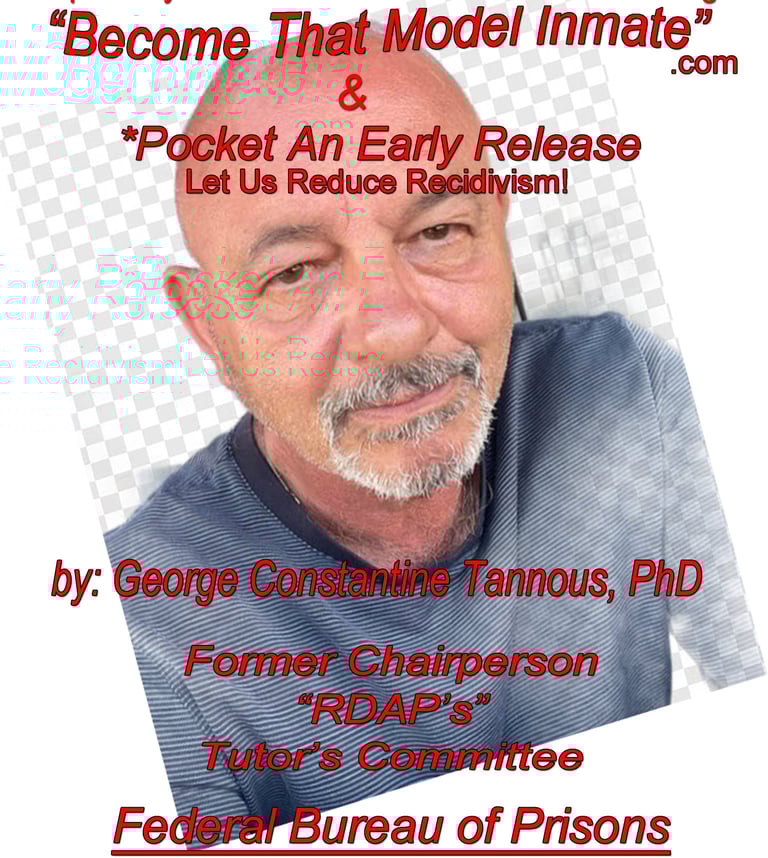
Let’s Work Together: Reducing Recidivism, the tendency of a convicted criminal to reoffend, Through Transformation and Healthy Relationships Via Our Exclusive Program, "Become that Model Inmate", and Our Weekly Messages.
One of the greatest challenges facing families and communities today is recidivism—the cycle of returning to incarceration after release. But there is hope. When families, faith communities, and incarcerated individuals work together with purpose, healing can begin. Our mission is to build strong, healthy relationships with our loved ones behind bars so that when they are reintroduced into society, they return not as broken individuals, but as transformed people with renewed character, faith, and responsibility.
Order Our Entire Program, 8 Modules, "Become That Model Inmate!" & Share with Your Loved Ones. Details Here -->

Our Mission
Helping inmates become role models for safer family connections.
Weekly Messages


Listen to inspiring talks that encourage positive change inside.


Family Support
Resources to help families stay connected and hopeful during tough times.
Guidance for inmates to build trust and safety with their loved ones.